SolSiKnTA equips vulnerable rural women and girls to turn agricultural waste into protein and organic fertilizer using insect technology, creating income, reducing waste, and bolstering food systems.
The project will begin with a waste mapping exercise in Kakamega County, focusing on areas near towns and market centres to identify reliable sources of organic waste. Transporting waste over long distances is not sustainable, as organic waste typically contains 50–70% water, making transportation costly and inefficient. The mapping will therefore ensure that Feed Freedom Stations are strategically located close to waste sources to maximize efficiency.
Following this assessment, four women and/or girls from the Community-Based Organizations (CBOs) located near these waste hubs will be selected to serve as custodians and primary managers of the four Pro Feed Freedom Stations (FFS). Each CBO will nominate nine additional members, forming local technical teams responsible for the set-up of the stations
A total of 40 participants will undergo continuous coaching and mentorship over a six-month period, receiving hands-on training based on Standard Operating Procedures developed through three years of field experience. The training will cover construction, production management, biosecurity, waste handling, and business operations to ensure sustainable, community-led implementation. The women and girls will then be recruited as part of the Soldier Fly Diverse Limited sales representatives and construction team.
Objectives:
1. To train 40 women, from four Community-Based Organizations in Black Soldier Fly production and management through structured coaching using established Standard Operating Procedures within six months to address gender inclusion and agricultural skills gaps.
2. To construct and operationalize four Pro Feed Freedom Stations near identified waste hubs using trained local teams and provided equipment to process locally sourced organic waste, reduce waste mismanagement, and lower livestock feed and fertiliser costs, with all stations fully functional by Month 4 of the project.
3.To enable communities to convert organic waste into marketable Black Soldier Fly products through continuous mentorship and market linkage support, achieving measurable production of larvae and organic fertilizer and generating income for participating groups within six months to strengthen food security, women’s economic participation, and climate-smart agriculture.
The proposed budget of $5,000 is designed to establish a sustainable, community-led model for insect technology adoption while ensuring long-term impact beyond the project period.
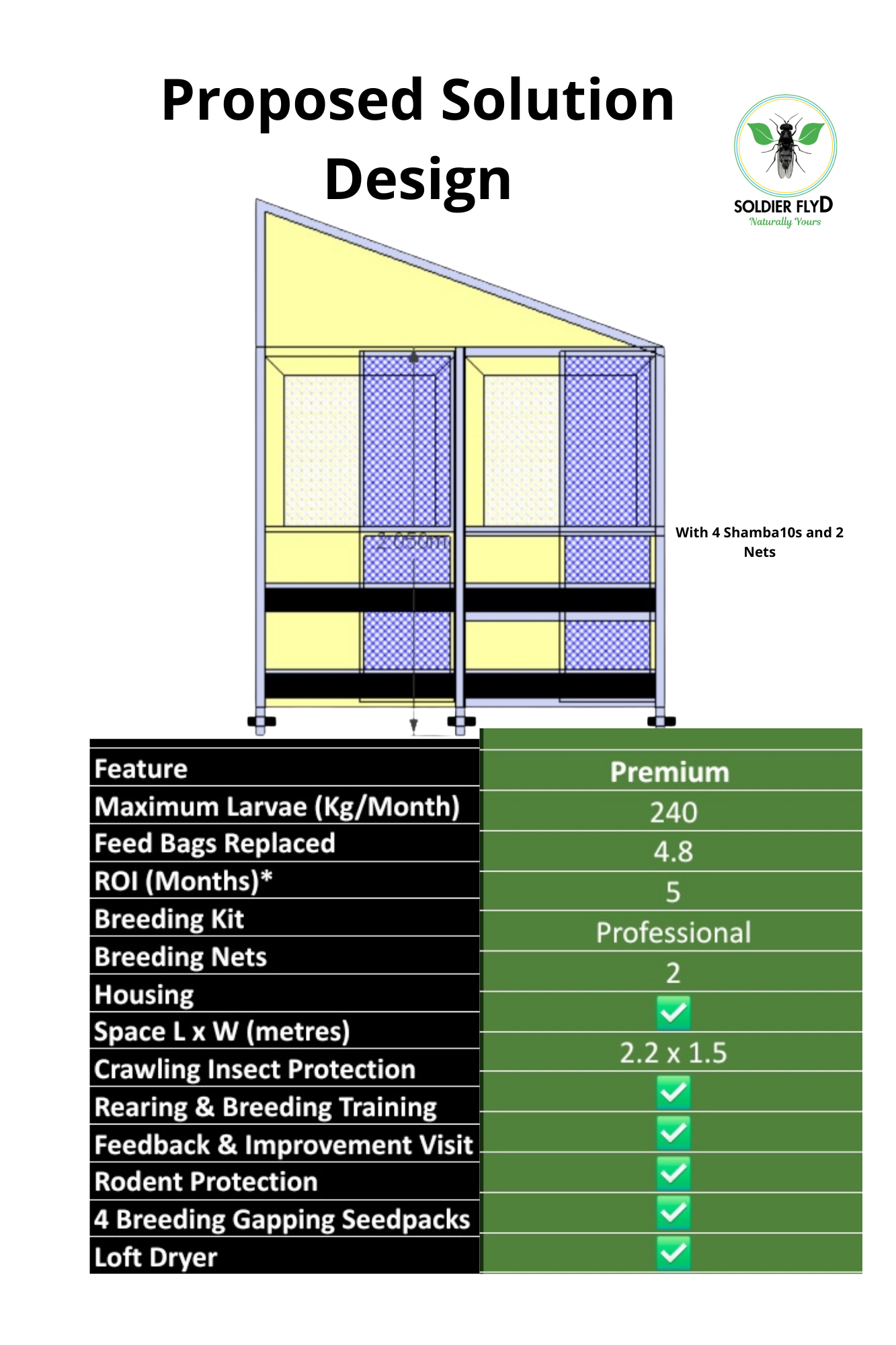
The allocation for Pro Feed Freedom Stations ($2,172) supports the construction of four decentralized production units strategically located near organic waste sources identified through the waste mapping exercise. These stations form the core infrastructure required for converting agricultural and food waste into protein and organic fertilizer, enabling local ownership and reducing transport costs. Each of the Pro FFS will give the group 240 kg of protein with 576 kg of organic manure per month. The larvae can be sold between $0.50 to $1 per kg and the manure for $0.40 to $1 per kg. The group members will have subsidized prices(lower price) while other parties will get the premium prices. The lowest amount they can make in a month will be $350 per month with the highest being $816 per month. Soldier Fly Diverse Limited will be the first ready market for them.
The Training and Skills Development component ($1,600) will equip 40 women and girls with practical technical and entrepreneurial skills over a six-month mentorship period. This investment ensures that beneficiaries gain the knowledge required to independently operate, maintain, and scale the systems using established Standard Operating Procedures developed over three years of field implementation. They will later be recruited for free-lance construction jobs for the FFS.
Funding for Tools and Building Equipment ($1,020) will provide shared construction and operational tools necessary for safe installation, maintenance, and continued production activities, strengthening local technical capacity and reducing future operational costs.
The Communication budget ($208) supports outreach, documentation, and knowledge dissemination to promote adoption, share learning outcomes, and encourage replication across additional communities.
Overall, this budget prioritizes capacity building, local ownership, and scalable infrastructure, ensuring that the investment generates lasting economic, environmental, and social benefits for participating women and community groups.
The project will be tracked through a structured monitoring and evaluation system designed to measure progress, ensure accountability, and support continuous learning throughout implementation. At the start of the project, a baseline assessment will be conducted during the waste mapping exercise to document available waste sources, participant skills, and existing feeding and waste management practices. This information will guide planning and provide a reference point for measuring change. Progress will then be monitored monthly through field visits, production records, and training attendance logs. Each of the four Pro Feed Freedom Stations will maintain simple records capturing the quantity of waste collected, larvae and frass produced, equipment use, and participation levels, with particular attention to women’s involvement. Training and mentorship sessions will be tracked using attendance sheets, coaching reports, and participant feedback forms to assess knowledge transfer and identify areas needing additional support. Financial tracking will also be carried out to monitor operational costs and income generated from BSF products, helping evaluate improvements in livelihoods and cost savings. Midway through the project, a review will assess construction progress, station functionality, and adoption challenges, allowing adjustments where necessary. At the end of six months, an endline evaluation will measure key indicators such as waste diverted from dumping, production volumes, participant engagement, and early income outcomes. Qualitative feedback from beneficiaries and community leaders will complement quantitative data to capture social and environmental impacts. Regular photo documentation, activity reports, and verification visits will ensure transparency for donors and partners while supporting learning for future scale-up. This tracking approach ensures that progress is measurable, challenges are addressed early, and the project delivers sustainable results.
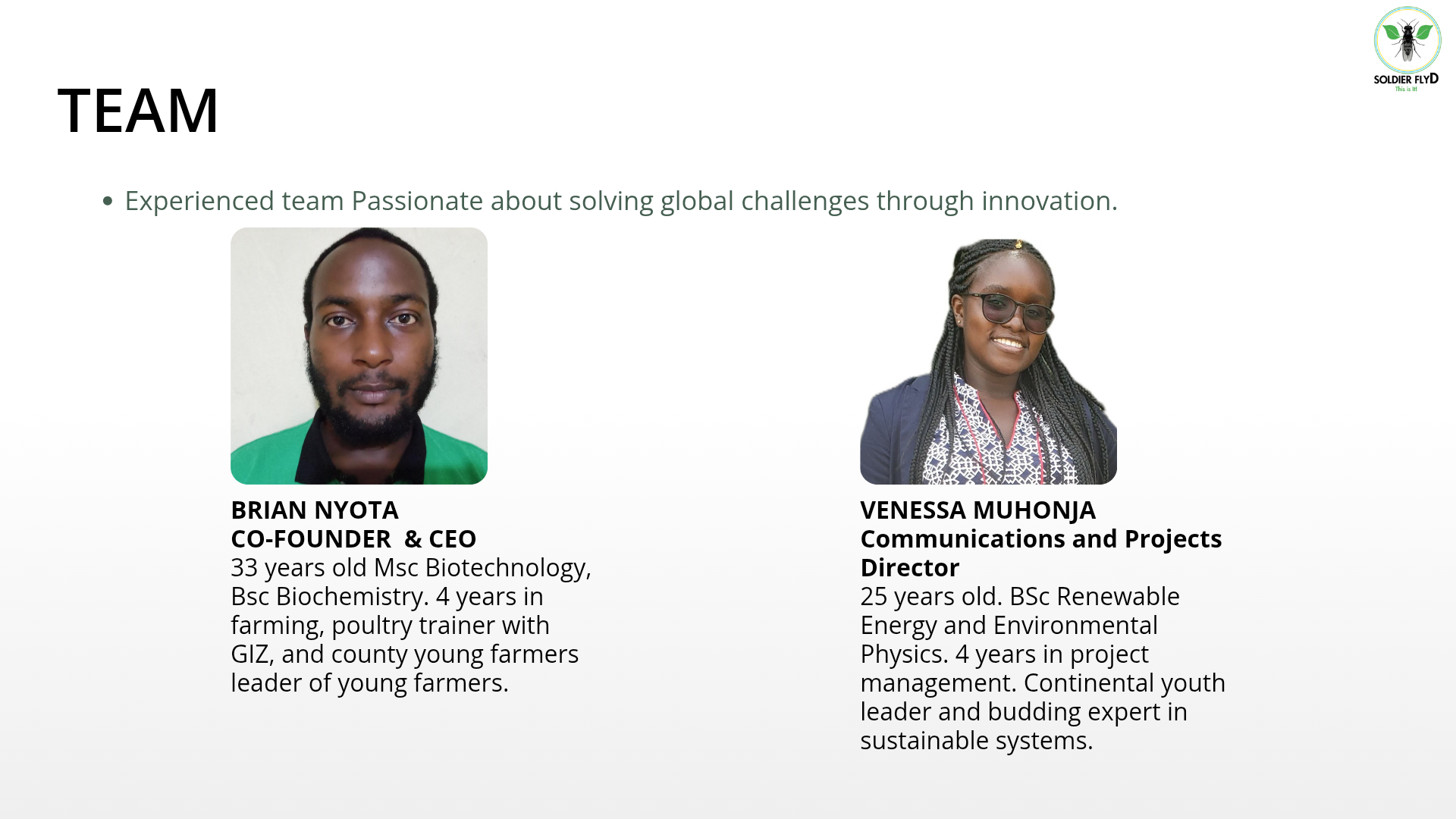
The main team will consist of Venessa Muhonja, a twenty-five- year-old young professional with a background in Renewable Energy and Environmental Physics and Brian Nyota, a thirty-three-year-old with a background in Biochemistry. They both have a passion to create change in their comunities for women and girls to access the best efficient technology that will benefit them not only economiclly but also enrich their livelihoods.